Turn on any political talk show in Cameroon today and the format is familiar: raised voices, interrupted speakers, applause lines, and personal attacks. What is missing in all of this is the substance. Beneath the noise lies a troubling transformation: politics is no longer a contest of ideas, but a ritual of ethnic affirmation.
Tribalism has not merely influenced Cameroonian politics. It has redefined its very logic.
In a functioning democracy, political allegiance is, in theory, programmatic. The citizen evaluates a candidate on the basis of competence, record, and vision.
In contemporary Cameroon, that contract has been inverted.
For a growing segment of the electorate, the primary criterion for support is not what the candidate proposes, but who the candidate is, and more precisely, where he comes from.
The politician is no longer judged as a public servant. He is claimed as a son of the soil. His ethnic origin becomes his political manifesto. His failures are excused, his excesses rationalised, and his opponents dismissed, not on the basis of evidence, but on the basis of belonging.
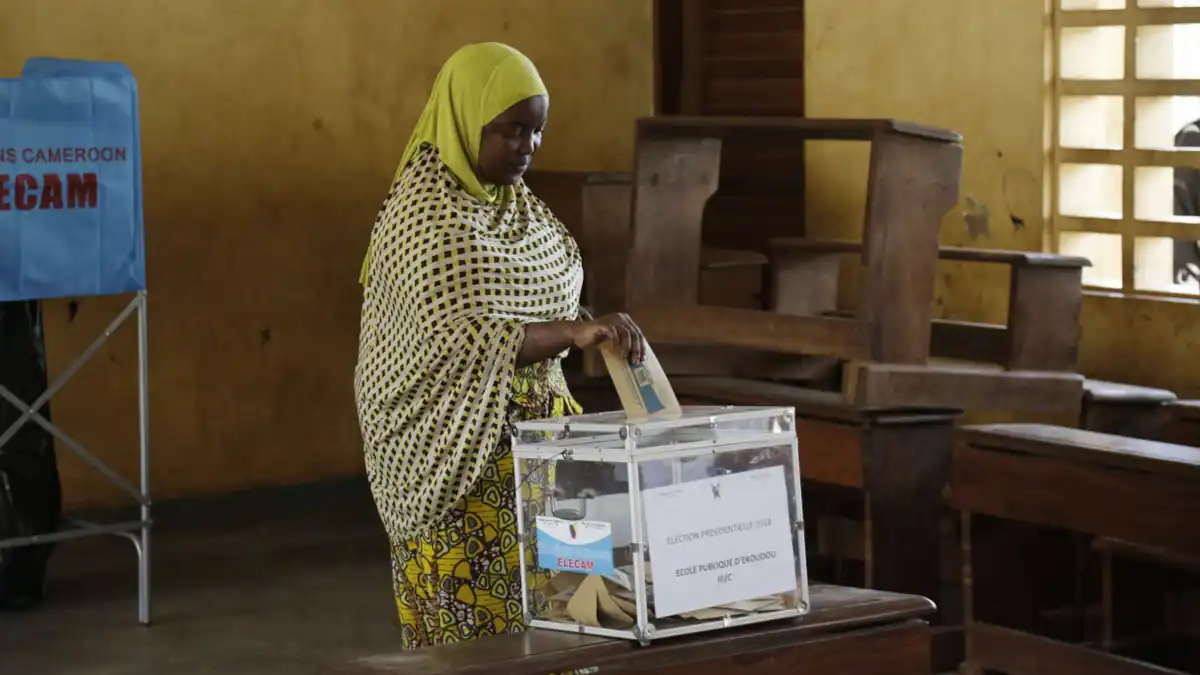
The consequence is profound: elections cease to be democratic deliberations and become tribal competitions. The ballot box is transformed into an instrument of demographic measurement. The central question shifts from "Who can govern the Republic?" to "Which community can mobilise the largest bloc to secure access to the state?" Politics, in this sense, becomes a zero-sum struggle for ethnic representation rather than a collective search for the common good.
The press, which ought to serve as a corrective to this drift, has in many instances become its amplifier.
A systematic reading of the Cameroonian media landscape reveals a pattern that can no longer be dismissed as coincidence. When a public official receives disproportionate, uncritical coverage, a closer examination often reveals a shared geographic and ethnic origin between the subject and the publisher. The mayor is elevated to statesman. The routine appointment is framed as a historic breakthrough. The local notable is recast as a national figure.
This is not journalism. It is ethnic public relations.
Journalists, in this configuration, no longer function as watchdogs of power. They function as custodians of their community's image. Their editorial choices are guided less by newsworthiness than by loyalty. The editorial line becomes an extension of the village square.
Equally revealing is the reaction to criticism. When a journalist from outside a given region subjects a local political figure to scrutiny, the response is rarely a factual rebuttal. It is perceived, and framed, as a territorial violation, an intrusion by an outsider into the affairs of a community. Critique is re-coded as aggression. Accountability is re-interpreted as tribal hostility.
This is the logic of the enclave: "You do not have the right to judge our son. They tell you you don’t come from that Division so you can’t interfere"
And if you insist to do your job, you’re accused of being sponsored, manipulated, or driven by ethnic animus. The debate is thus displaced from the terrain of policy to the terrain of identity.
The intellectual cost is enormous. Public discourse is evacuated of its critical function. Issues that should dominate the national conversation, infrastructure, education, public health, governance, corruption, are subordinated to the defence of ethnic honour. To interrogate the performance of a leader from one's own community is to risk being branded a traitor. To acknowledge the competence of a leader from another community is to risk being accused of betrayal.
What remains is a spectacle. A kindergarten talk show, as it were, in which political actors perform for their respective constituencies, exchanging slogans rather than arguments, and where volume substitutes for vision.
This is not merely a cultural failing. It is a structural crisis. When politics is reduced to tribal mobilisation, the state itself is fragmented. Institutions lose their national character. Meritocracy is replaced by clientelism. And the citizen is reduced from a political subject to an ethnic foot soldier.
Until Cameroon restores the primacy of the idea over the identity, of the programme over the pedigree, its elections will continue to produce the same theatre: loud, polarised, and ultimately empty.
And the Republic will continue to pay the price for a democracy that has forgotten how to debate.